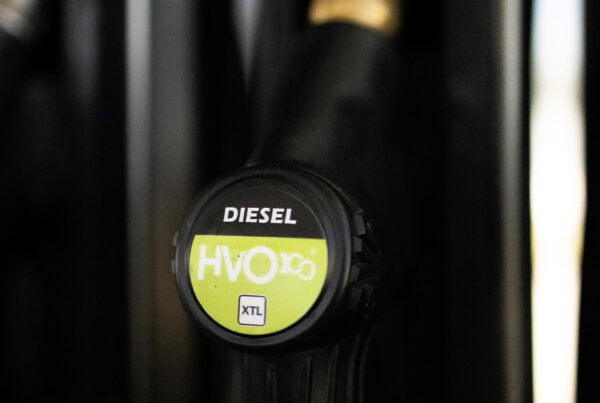
Shell has officially expanded its portfolio in the heating sector as of 9 February 2026 with Shell Renewable Heating Oil, designed specifically for commercial and industrial customers. According to Shell, the fuel can reduce CO₂e lifecycle emissions by up to 90% compared with fossil heating oil (depending on the variant, 80–90%).
The product is based on HVO and HEFA (Hydroprocessed Esters and Fatty Acids) made from recycled oils and fats. It is intended to be usable in existing and new combustion plants above 1 MW (in accordance with the 44th BImSchV) without additional investments in burner technology or tank infrastructure—minor modifications may be required.
More information on the technical requirements and the product can be found at: https://hauswaerme.shell.de/geschaeftskunden/shell-renewable-heating-oil.html
Shell is offering the product immediately exclusively via Shell sales partners, supplied from the Shell depot in Essen. To distinguish it from “Shell Renewable Diesel,” the heating product is dyed red.
Lever for decarbonization and process heat—or also for private households?
This is a strong signal for drop-in renewable molecules beyond road transport: HVO/HEFA is being positioned as an immediately usable decarbonization lever for process heat, district heating, and industrial applications. At the same time, Shell makes it clear: for private heating systems < 1 MW, Germany currently still lacks the legal approval under the 1st BImSchV, even though the technology is fundamentally compatible. It remains to be seen when approval for private households will be granted. eFUEL-TODAY will report in any case.
(*) According to Shell: In this context, CO₂e (carbon dioxide equivalent) emissions include CO₂, CH₄, and N₂O. The CO₂e emissions over the product lifecycle are the emissions associated with feedstock production, feedstock transport, fuel production, transport and distribution of the fuel, as well as end use and/or combustion.
Image & source: © Shell.de