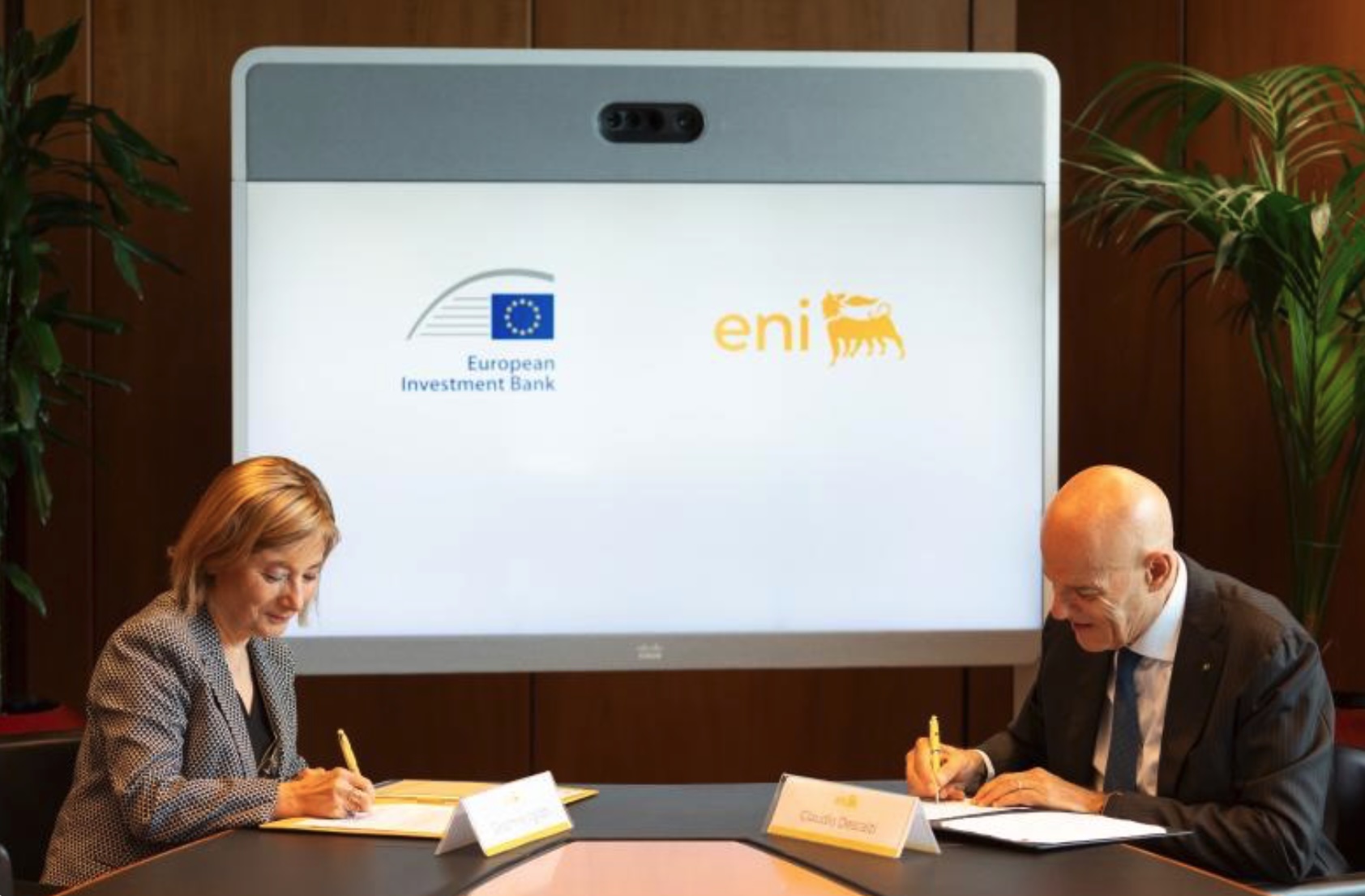
The European Investment Bank (EIB) and Eni have agreed on €500 million in financing to convert selected units of the Sannazzaro de’ Burgondi refinery (Province of Pavia, Italy) into a biofuel production facility. The package is structured as a 15-year loan designed to support the transition toward renewable fuels.
At the heart of the project is the conversion of the Hydrocracker unit (HDC2) to Ecofining™ technology, alongside the construction of a pre-treatment unit for waste- and residue-based feedstocks. The EIB lists used cooking oil, animal fats, and residues from the agri-food industry among the feedstock base—exactly the kind of material streams that are essential for credible and traceable biofuel supply chains.
Production is planned to start from 2028. Sannazzaro is expected to produce HVO diesel and SAF (“biojet”) with a capacity of around 550,000 tonnes per year. The project leverages existing infrastructure and utilities on site and complements conventional fuel production with dedicated biofuel capacity.
Why this matters strategically for Italy: beyond climate impact, the EIB explicitly highlights energy security and the role of expanding European biofuel capacity in the context of REPowerEU. At the same time, the move fits into Eni/Enilive’s strategy to significantly increase biofuel capacity by 2030, including SAF capacity.
eFUEL-TODAY perspective: for the existing vehicle fleet, HVO is a direct lever (drop-in, where approved), while SAF is currently the central available decarbonisation pathway for aviation. The Sannazzaro conversion is therefore a strong, industrial-policy relevant signal: Italy is actively building value creation and supply security for renewable molecules.
Source: www.eib.org
Image: © EIB