“We’re making Direct Air Capture ready for series production”
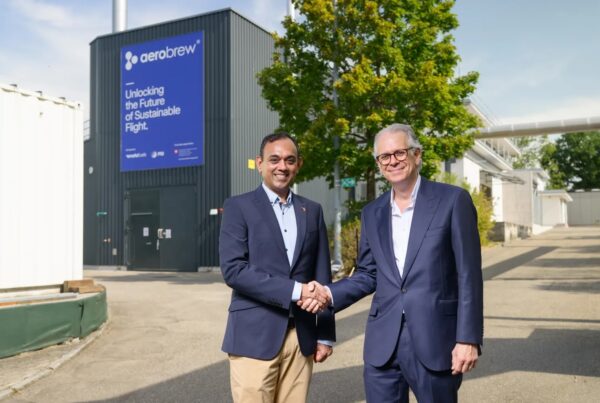
Alexander Backs, Co-CEO of DACMA, at the opening of the DACMA Competence Center in the Port of Hamburg on 16 October 2026.
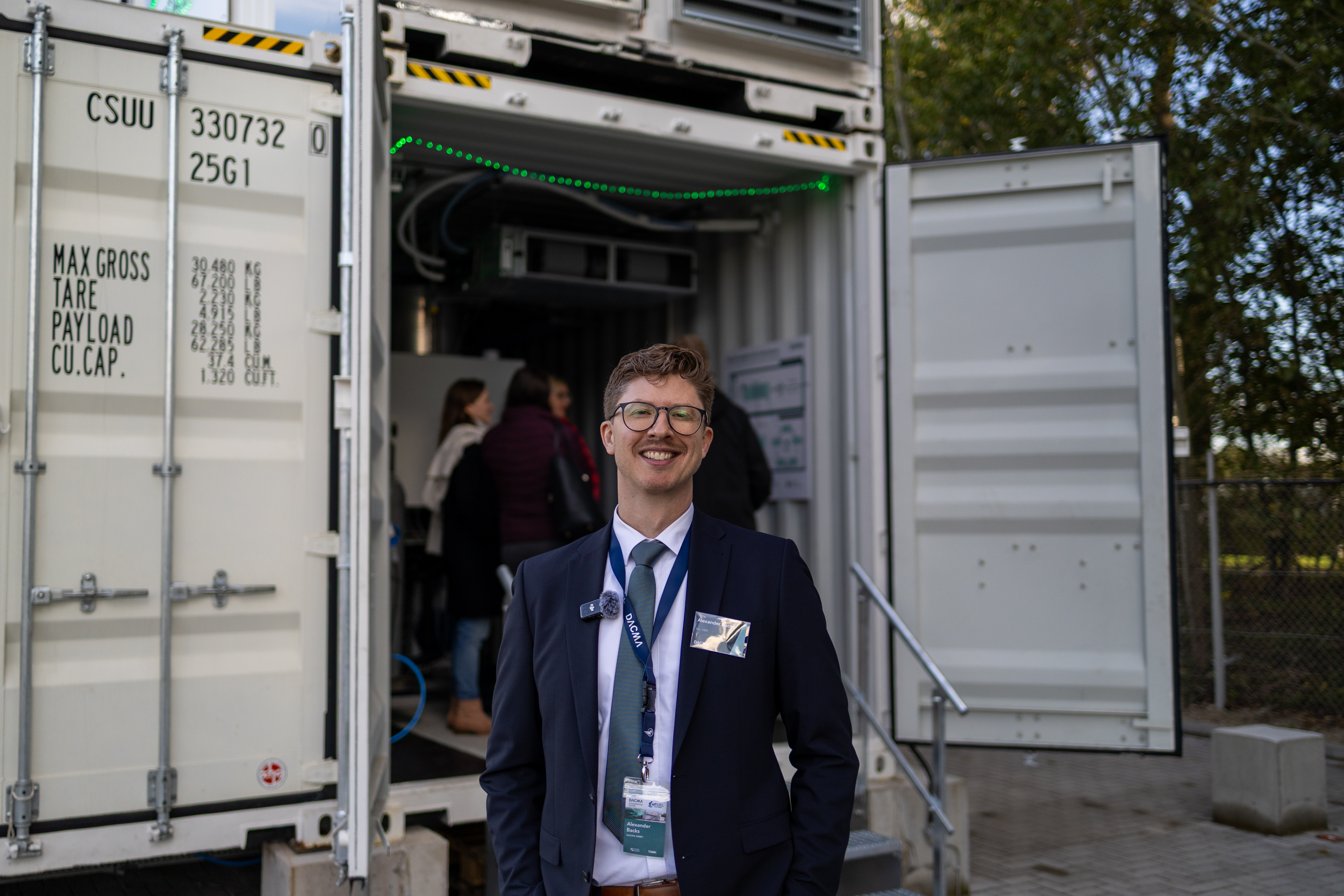
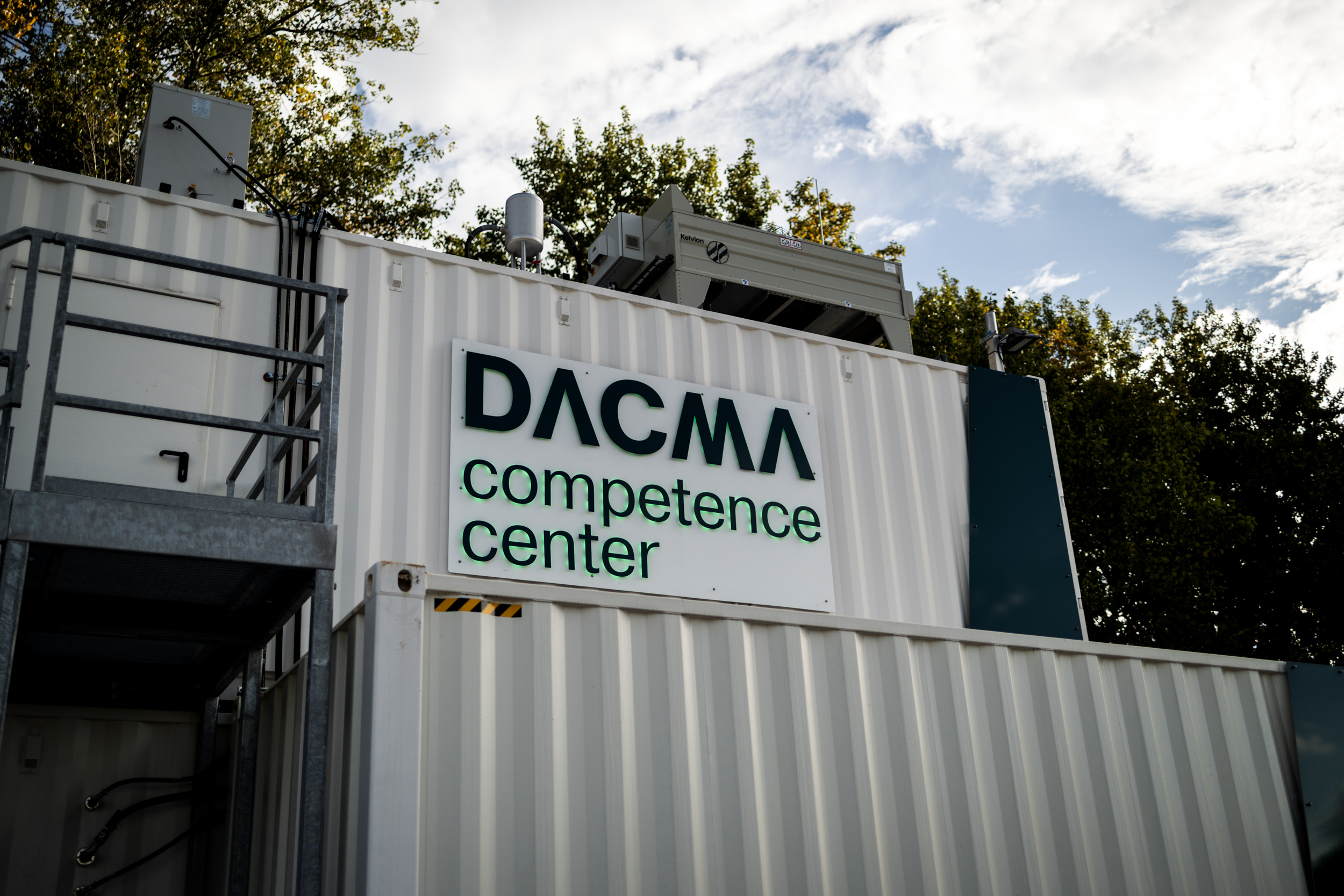
Since 16 October 2026, CO₂ has been captured from the air in the Port of Hamburg. In perfect weather, DACMA GmbH, eFuel DAC GmbH, the Hamburg University of Technology (TUHH) and the eFUEL GROUP opened the DACMA Competence Center at the Hamburg Blue Hub. Guests included Hamburg’s Senator for Economic Affairs, Dr Melanie Leonhard, and Evelyne Coulombe of the Canadian Embassy. Just around ten months after the groundbreaking, the research and test centre for Direct Air Capture (DAC) is now in operation. Remarkably fast by Hamburg standards!
For the fuel industry, this is no ordinary event at the port. In addition to green hydrogen, synthetic fuels need a carbon source. DAC can supply this carbon directly from the ambient air, including in the Port of Hamburg.
eFUEL-TODAY attended the opening and spoke with Alexander Backs, Co-CEO of DACMA, about what the facility does, what is being tested there and when CO₂ from the air will end up in the tank.
For anyone hearing about this for the first time today: What is happening here in the Port of Hamburg, and what does the facility behind us do?
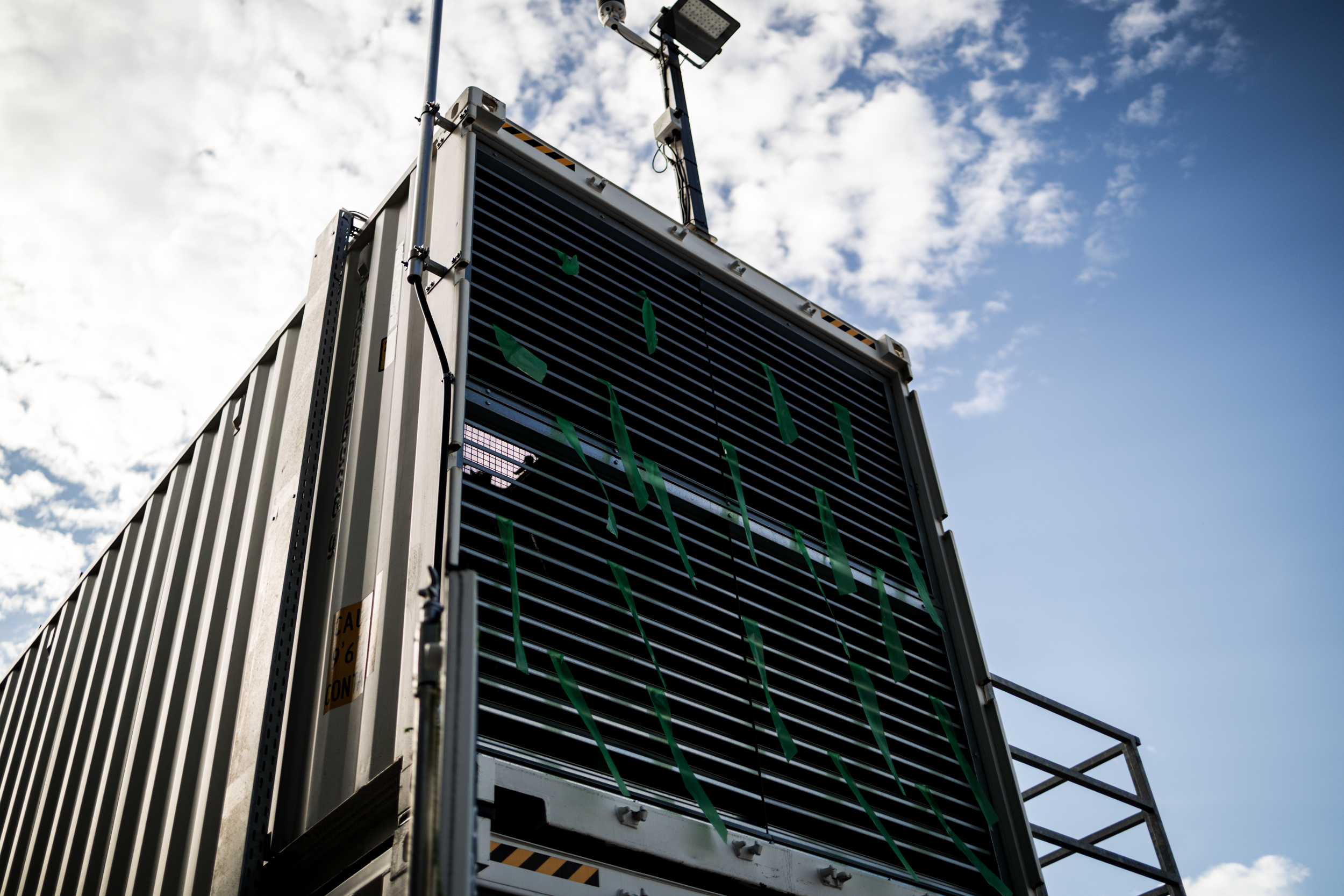
Backs: My name is Alexander Backs, I am Co-CEO of DACMA. Today we opened the DACMA Competence Center here. It is a test centre where we are further developing Direct Air Capture technology to be ready for the global market. To do this, we use filter systems here that capture CO₂ from the air.
Why do we need CO₂ from the air in the first place, and what role does it play for synthetic fuels?
Backs: The captured CO₂ can then be used as a raw material in downstream processes. On the one hand in the production of synthetic fuels, together with green hydrogen, and on the other hand for the storage of CO₂ underground.
What exactly is being tested here at the Competence Center, and what is the end goal?
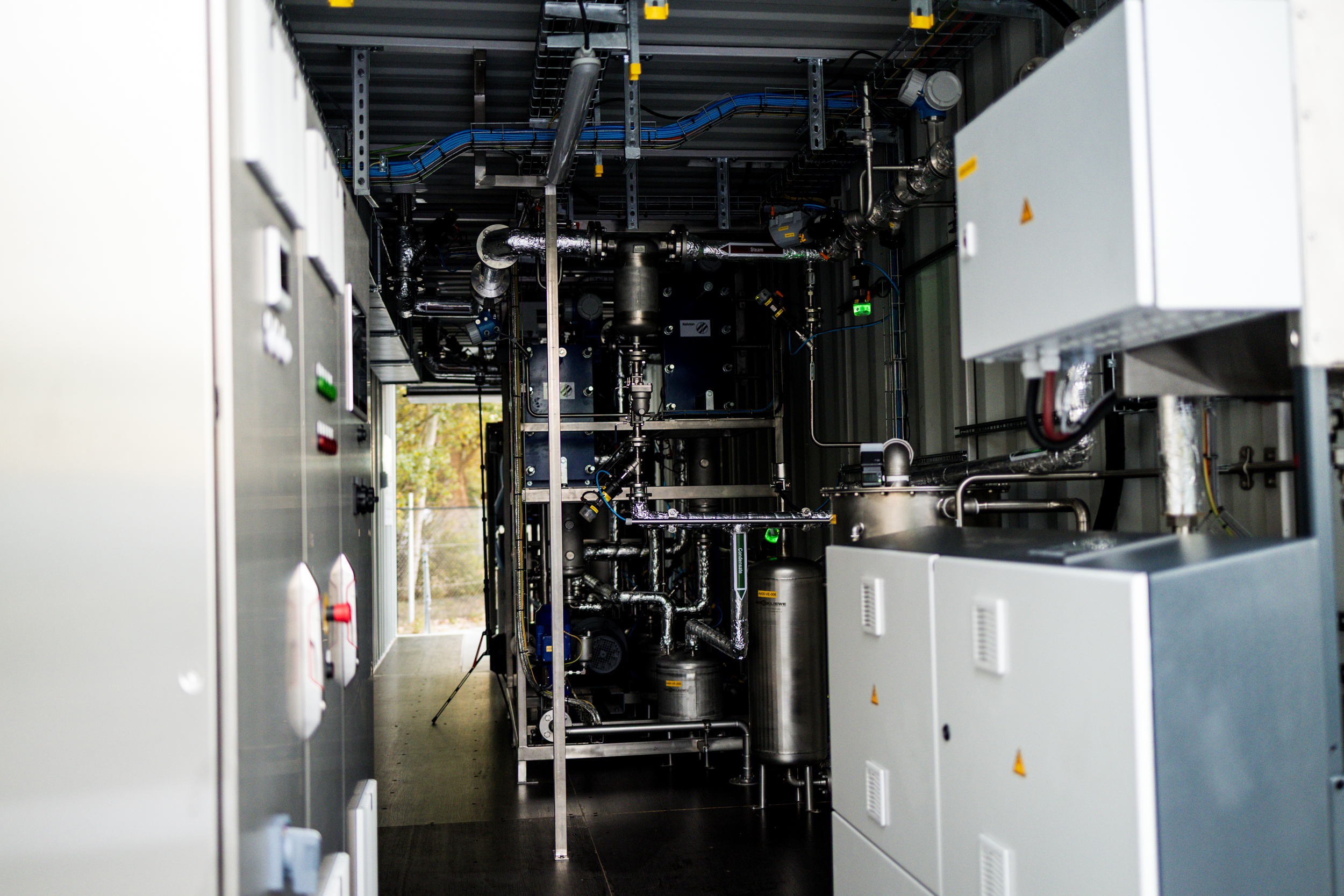
Backs: Here at the Competence Center, we test the processes required to capture CO₂ from the ambient air. But we also test all upstream and downstream systems. That means the pre-filtering of the intake air and the post-processing of the CO₂, i.e. purification and liquefaction, so that the CO₂ is ready for further processing. This can take place, for example, in a Fischer-Tropsch synthesis to ultimately produce synthetic fuels such as e-methanol or e-SAF.
When will this become noticeable in everyday life, for example at the fuel station, and what still needs to happen before then?
Backs: We can already use the CO₂ to produce synthetic fuels today. The CO₂ captured at this facility is taken to our project partners in Denmark, where it is already being used to produce e-methanol. You may not be able to buy it directly at the fuel station yet. But this Competence Center exists to further develop the established processes, make the technology ready for series production and roll it out across the global economy.
Analysis
The interview shows where Direct Air Capture stands today: The technology works, and the captured CO₂ is already being processed into e-methanol. However, there is still a long way to go before it becomes a fuel available at the fuel station, and not only from a logistics perspective. The Hamburg Competence Center is intended to shorten this path in the future. Capture, pre-filtering, purification and liquefaction are being tested there under real industrial conditions so that the units can go into series production and scale worldwide. Initial projects are already being trialled in Canada.
For eFuels, this is an important prerequisite. Without affordable CO₂ from sustainable sources, they cannot be produced in large volumes. We will stay on the topic and report on how the Competence Center and the projects develop.
About the DACMA Competence Center
The DACMA Competence Center at the Hamburg Blue Hub is DACMA GmbH’s research and test centre for modular Direct Air Capture units. According to DACMA, the facility on site is powered by solar electricity and biofuels. The first major project is PEGASUS, an initiative of DACMA, Lother GmbH and TUHH in which CO₂ from the air is processed with renewable hydrogen into e-methanol. For permanent storage, DACMA is working with the Canadian company Deep Sky, which mineralises CO₂ deep underground in basaltic rock.
Further information on the project: dacma.com
Images: © eFUEL-TODAY